Dubai & UAE Speed Limits 2026: Roads, Fines & Radar Rules
By RentRadar Editorial Team
القراءة بالعربيةЧитать на русском
Quick answer
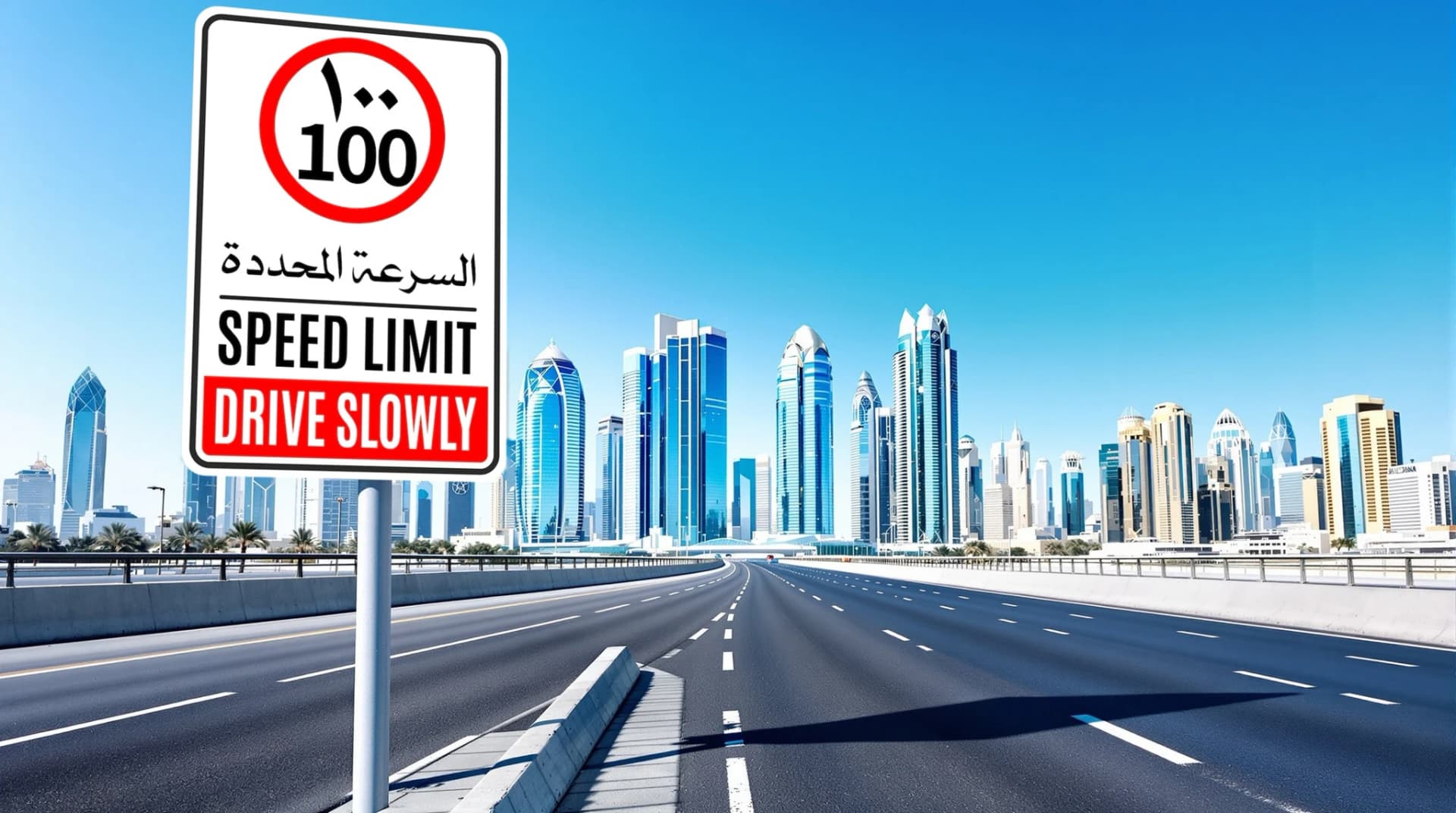
Follow the speed shown on your current road section. Five Dubai streets changed on 1 November 2026. Dubai Police publishes separate road and radar figures, while Abu Dhabi removed its 20 km/h leeway. The published speeding schedule reaches AED 3,000, 23 black points and 60 days of light-vehicle retention.
A road number is not a single speed limit. On a journey through Dubai, the same highway can change limit by section; continuing into another emirate introduces another set of signs and enforcement arrangements. Start with the sign beside the section you are actually driving.
This guide separates three things often mixed together: the posted maximum, a published radar-control setting and the penalty for an offence. A radar figure is not a higher driving target. Temporary works, electronic instructions and conditions on the road still matter.
Five Dubai speed-limit changes from 1 November 2026
RTA's 21 October announcement specifies the following changes in both directions. They apply to the named sections, not automatically to the whole street.
| Street | Section | Before | From 1 November |
|---|---|---|---|
| Al Asayel | Oud Metha Street to Al Meydan Street | 60 | 80 |
| Al Mustaqbal | Sheikh Rashid Street to Al Meydan Street | 60 | 70 |
| Latifa bint Hamdan | Sheikh Zayed Road to Al Khail Road | 60 | 70 |
| Al Rebat | Marrakech Street to Sheikh Mohammed bin Zayed Road | 100 | 90 |
| Sheikh Sabah Al Ahmad Al Jaber Al Sabah | 2nd December Street to Khalid bin Al Waleed Street | 80 | 70 |
The announcement also says signs would be replaced and cameras reprogrammed. If a saved navigation route still displays an older figure, follow the road signs. In particular, a familiar setting of 100 on the affected Al Rebat section is now above its 90 km/h maximum.
Major Dubai roads: use the register as preparation
Dubai Police's street register lists road speed separately from radar control. Its displayed update date predates the November changes, so the newer RTA section notice takes precedence for the five roads above. The reference below preserves the main-road comparisons without suggesting that a directory overrides a sign.
| Road | Published road speed, km/h | What to watch for |
|---|---|---|
| Sheikh Zayed Road, E11 | 120 / 100 | Section changes |
| Sheikh Mohammed bin Zayed Road, E311 | 110 | Dubai entry only; check signs across emirate boundaries |
| Emirates Road, E611 | 110 | Ramps and connecting roads have their own signs |
| Dubai–Al Ain Road | 120 / 100 | Section changes and emirate boundary |
| Al Khail Road | 100 | Exits and temporary restrictions |
| Al Rebat | 90 on the specified changed section | The older register's 100 does not reflect the November notice |
| Hessa Street | 100 / 80 | Section changes |
| Umm Suqeim | 90 | Local signs and junction approaches |
| Jumeirah Road / Al Wasl | 70 | Side roads are separate |
| Palm Jumeirah | 60 | Read the sign on the actual access road |
For residential streets, car parks and service roads, do not carry a highway speed onto the smaller road. Check the new sign after a turn and slow appropriately for pedestrians and restricted visibility.
Dubai radar settings and Abu Dhabi's no-buffer rule
For example, the Dubai Police register pairs Al Khail's road speed of 100 with a radar-control value of 121, and the Dubai E311 entry pairs 110 with 131. Those published settings explain the frequently discussed “20 km/h buffer”; they do not change the posted road speed or establish one universal threshold for every road and camera.
Abu Dhabi Police removed the 20 km/h leeway from 12 August 2018, aligning the signs and radar settings. Do not carry an assumed Dubai margin into an Abu Dhabi journey. Plan to comply with the posted limit in both emirates.
Likewise, do not assume that Sharjah, Fujairah or Ras Al Khaimah uses a setting you remember from Dubai. A sign change, temporary instruction or electronic restriction is a reason to reassess speed immediately, not after the next camera.
UAE speeding fines, black points and vehicle retention
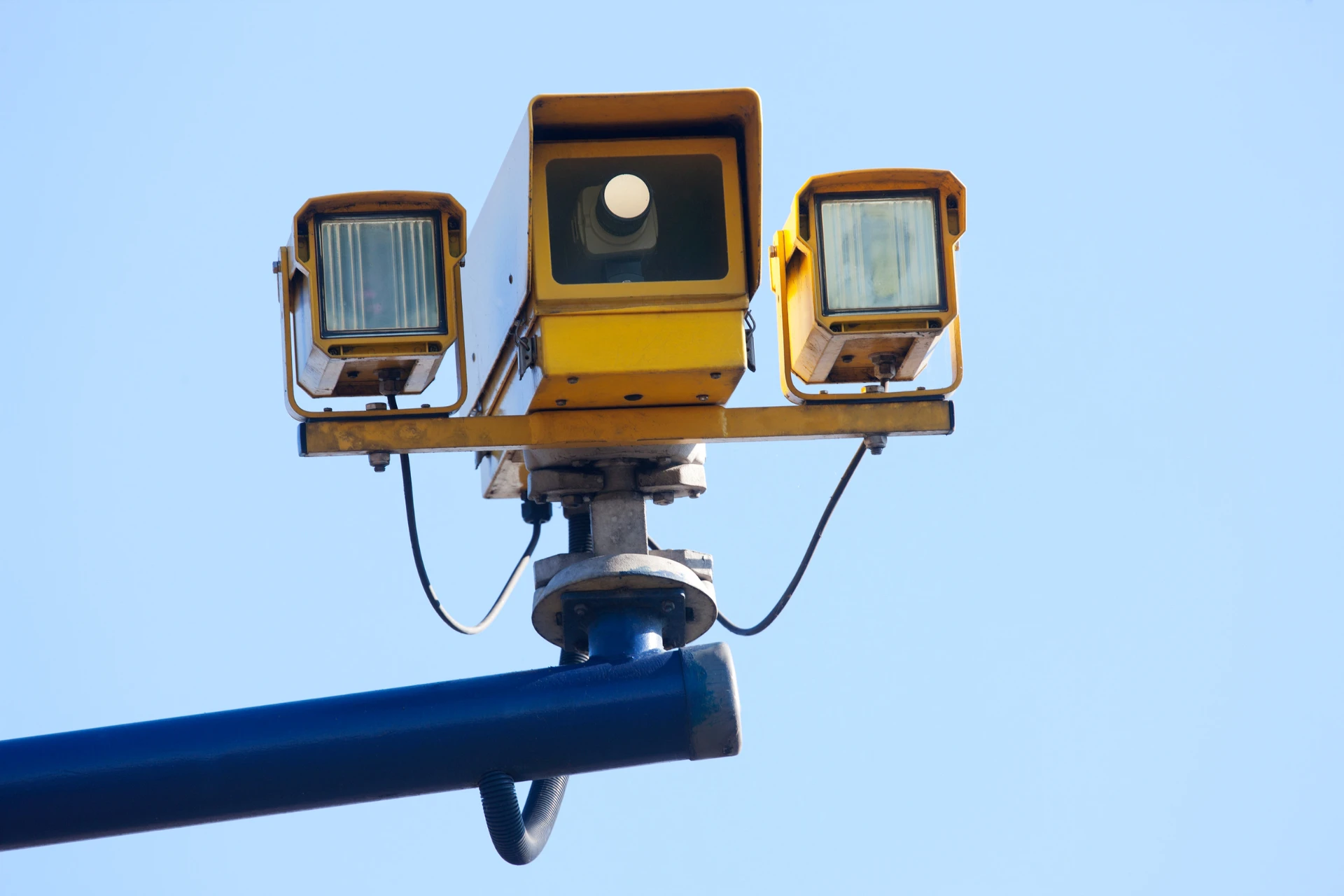
The government-published Ministerial Resolution 178 schedule gives the following tiers. The wording is simplified into non-overlapping bands. These are base penalties for light vehicles; use the authority's offence record for the applicable amount and any additional requirements.
| Excess over the maximum speed | Fine, AED | Black points | Light-vehicle retention |
|---|---|---|---|
| Up to 20 km/h | 300 | None listed | None listed |
| Over 20, up to 30 km/h | 600 | None listed | None listed |
| Over 30, up to 40 km/h | 700 | None listed | None listed |
| Over 40, up to 50 km/h | 1,000 | None listed | None listed |
| Over 50, up to 60 km/h | 1,500 | 6 | 15 days |
| Over 60, up to 80 km/h | 2,000 | 12 | 30 days |
| More than 80 km/h | 3,000 | 23 | 60 days |
The upper band must not be merged into the AED 2,000 tier. The same schedule lists AED 400 for driving below a minimum speed where one is set; that row lists no black points. Do not confuse a minimum-speed sign with a maximum, or treat an old report about one road as a rule for every motorway.
Fine payment, black points and vehicle retention are separate consequences. A rental invoice can also contain contractual charges. The table does not quote release costs or promise that paying the fine makes a retained vehicle immediately available.
What happens when the speeding fine involves a rental?
Ask the supplier for the authority's record, not only a total to pay. Match the plate, offence time and road to your rental and any vehicle replacement. Keep collection and return timestamps, and ask how the supplier will contact you if a record arrives after return.
Before either party pays, agree who is handling settlement and how the receipt will be reconciled. Request a breakdown of the fine, government fees and any contract-based administration, recovery or loss-of-use charge. Do not assume another company's processing percentage, deposit hold or fee per point applies to your booking.
If the car is retained or the fine needs driver attribution, follow the authority's procedure with the supplier. Paying an additional rental charge is not a substitute for correctly identifying the driver. Dubai Police's services include black-point transfer, radar evidence and violation review; availability depends on the record and eligibility.
Our fine-checking and payment guide explains the official channels, duplicate-payment checks and disputed records in more detail.
A practical routine for an inter-emirate drive
- At collection: identify the car's speed display, cruise control and limiter while parked. Check whether the display is in km/h.
- Before leaving: set the route and allow time for exits, parking and slower sections. Saving a few minutes is not a reliable way to rescue an overfilled itinerary.
- After every limit change: adjust speed and any cruise-control setting. A dashboard sign-recognition system may miss a temporary sign.
- At emirate boundaries: read the signs again. Do not extend a Dubai directory entry to an Abu Dhabi stretch with the same road number.
- In fog, rain or congestion: follow electronic instructions and leave more room. A posted maximum is not a requirement to maintain that speed in poor conditions.
- If another driver pressures you: keep a safe following distance, use signals and change lanes only when safe. Do not accelerate above the limit to satisfy a following vehicle.
For a longer journey, choose stops before setting off: see the Dubai–Al Ain route planner and Abu Dhabi trip guide. Check DARB tolls separately; toll charging times do not determine road speeds.
Common speed-limit questions
Is Sheikh Zayed Road always 120 km/h?
No. The Dubai Police register lists 120 and 100 for different sections. Follow the sign where you are driving, including any temporary instruction.
Can I safely set cruise control to the radar threshold?
Use the posted maximum as the ceiling, allowing for conditions. A published radar-control setting is not permission to exceed it, and it does not prove the setting of every camera ahead.
Does Dubai's E311 limit apply through Abu Dhabi?
No. A road number continues across different sections and jurisdictions. Read the local signs rather than extending the Dubai register's 110 km/h entry to the whole journey.
What is the highest ordinary speeding tier in the cited schedule?
More than 80 km/h over the maximum carries AED 3,000, 23 black points and 60 days of light-vehicle retention. Additional charges or measures depend on the actual case.
Can a fine be challenged if the details are wrong?
Dubai Police lists a violation-review service. Preserve the reference and relevant evidence, then confirm the procedure and deadline with the issuing authority. A map-app screenshot alone should not be treated as proof that the signed limit was different.
Publication and adaptation dates
This RentRadar page was first published on 6 December 2024; its original URL and publication date are retained. It was substantially revised on 18 November 2026 using Rentico's speed-limit guide, originally published on 29 October 2026, and the primary sources above.
The revision preserves the three table topics and both illustrations, verifies the November changes, corrects the highest speeding tier and the minimum-speed points claim, and separates supplier-specific terms from public penalties.
Sources
Source pages checked on .
- RTA — five street speed changes effective 1 November 2026
- Dubai Police — road-speed and radar-control register
- UAE Government — published traffic fine schedule
- WAM — Abu Dhabi Police cancellation of the speed leeway
- Dubai Police — fines, evidence and review services
- Rentico — source guide, 29 October 2026